On-Page SEO Services
Improve page content, structure, and search relevance so search engines can better understand your website and visitors can find useful information.
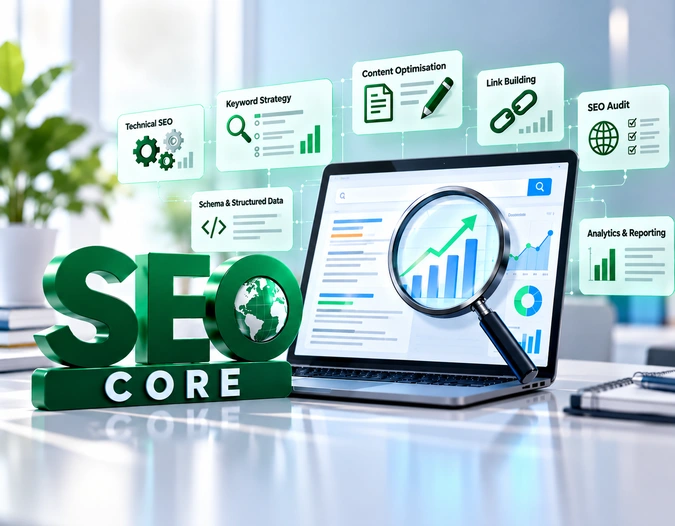
On-page SEO improves individual web pages so search engines can better interpret their content, relevance, and purpose while visitors can find information more easily. At Helios IT Solutions, we review key on-site elements including page content, title tags, meta descriptions, headings, internal links, URLs, images, and relevant structured data. Our approach emphasizes semantic relevance, clear information architecture, mobile usability, and alignment between search intent and page content.
We also assess how pages relate to one another across the website, improving internal linking and content relationships so users and search engines can discover relevant information more easily. By bringing together content optimization, page-level SEO elements, and usability considerations, we help make website pages clearer, easier to navigate, and easier to maintain while supporting organic search visibility.
Service Features
We optimize landing pages around search intent, topic relevance, and related concepts to create content that better addresses what users are searching for.
Strategic optimization of title tags and meta descriptions to improve search relevance, communicate page value, and encourage qualified clicks from organic search results.
We create a logical internal link structure that helps search engines discover and understand related pages while guiding users to relevant content across your website.
We optimize page layouts and content for responsive performance, mobile usability, and intuitive navigation across smartphones and other screen sizes.
Reviewing page-level indexability signals and relevant directives so important content can be accessed and interpreted as intended by search engines.
Structuring clear, descriptive, and search-friendly URLs that reflect the purpose and content of each page while maintaining a logical website hierarchy.
Reviewing relevant page-level Schema.org markup to describe supported content accurately and help search engines interpret eligible pages.
Reviewing page-level experience factors alongside content and layout to support usability across devices; deeper performance diagnostics can be handled as part of Technical SEO.
Assigning primary and related search terms to the most relevant pages based on search intent, topic relevance, and website structure to reduce keyword overlap and strengthen overall content targeting.
SEO Core Technology
We use practical on-page SEO methods to improve metadata, content relevance, page-level indexability, and the experience visitors have on your website.
Clearer search relevance and stronger opportunities for qualified organic clicks.
Aligns pages with relevant topics and user search needs.
Helps clarify which page version should be considered for indexing.
Supports readable content, clear navigation, and a consistent experience across devices.
Frequently Asked Questions About SEO
On-Page SEO provides the foundation for helping search engines understand your content, page structure, relevance, and search intent. Optimizing elements such as title tags, headings, internal links, content, and structured data can make your website easier to understand and navigate while supporting stronger organic search visibility.
A mobile-friendly website helps provide a consistent experience across smartphones and other devices. Google primarily uses the mobile version of a website for indexing, making responsive design, accessible content, clear navigation, and strong mobile usability important parts of a modern SEO strategy.
Crawlability refers to how easily search engine crawlers can discover and access the pages on your website. Good crawlability helps search engines navigate your site efficiently, understand its structure, and discover important new or updated content, supporting your overall organic search visibility.