Technical SEO & Website Performance Optimization
Improve website speed, crawlability, indexing, and structured data for search engines and users.
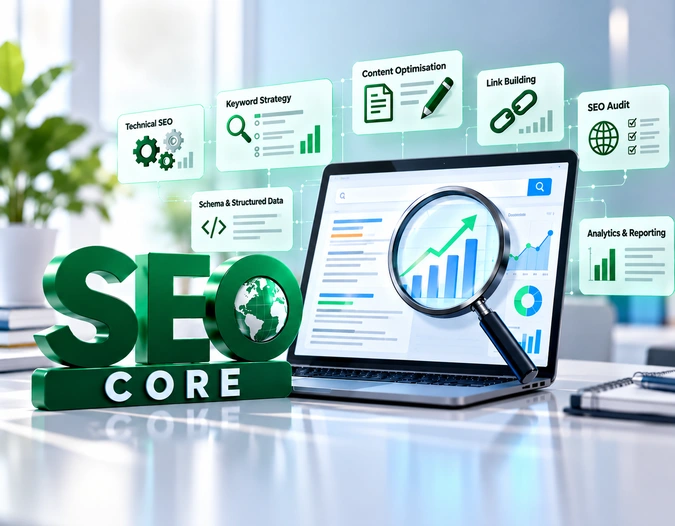
Technical SEO services focus on the website infrastructure that helps search engines discover, crawl, interpret, and index important pages. At Helios IT Solutions, we address practical technical issues involving site architecture, Core Web Vitals, structured data, indexing signals, and page performance. Our approach prioritizes improvements that make a website easier to access, understand, and maintain without promising specific search rankings.
Our work can include website speed optimization, mobile usability improvements, XML sitemap checks, crawlability fixes, and structured data implementation. We also investigate issues such as broken URLs, server errors, redirect problems, and resources that delay page rendering. The scope depends on the website's platform, existing setup, and identified requirements, helping establish a more reliable technical foundation for users and organic search.
Service Features
Reviewing LCP, INP, and CLS to identify loading delays, interaction issues, and layout shifts that affect the user experience.
Implementing relevant JSON-LD structured data to help search engines interpret business details, products, services, and page relationships.
Reviewing responsive layouts, text readability, touch interactions, and page resources to improve usability across mobile devices.
Reviewing internal links, URL patterns, navigation, and crawl access to help search engines discover important website pages efficiently.
Checking XML sitemaps for relevant, indexable canonical URLs and removing entries that are outdated, redirected, or unsuitable for submission.
Reviewing HTTPS implementation, mixed-content issues, and applicable security headers to support secure connections and safer browsing.
Reviewing JavaScript, CSS, caching, and resource loading to identify render-blocking assets and other sources of unnecessary page delays.
Reviewing robots.txt directives and indexing signals to help prevent unintended crawler restrictions and support appropriate search engine access.
Identifying broken URLs, server errors, redirect issues, and inaccessible resources that may affect website usability and search engine crawling.
SEO Core Technology
We use established technical SEO practices and relevant tools to investigate website performance, crawlability, indexing, and structured data issues.
Helps identify opportunities to improve loading speed, responsiveness, and visual stability.
Provides structured information that can help search engines interpret page content and relationships.
Helps communicate preferred URLs and supports the discovery of relevant website pages.
Supports appropriate crawler access and helps identify obstacles to discovering important content.
Frequently Asked Questions About Technical SEO
Technical SEO helps search engines access, crawl, interpret, and index important website pages. Issues such as broken links, incorrect indexing directives, slow loading, or inconsistent URL signals can create obstacles for search engines and visitors. Addressing relevant issues supports website accessibility, usability, and organic search performance.
Google primarily uses the mobile version of a website's content for indexing. Responsive layouts, accessible content, and suitable mobile performance therefore matter. We review mobile usability and page resources to identify issues that may affect visitors and the way search engines access website content.
Core Web Vitals are Google's user-focused metrics for loading performance, responsiveness, and visual stability: Largest Contentful Paint (LCP), Interaction to Next Paint (INP), and Cumulative Layout Shift (CLS). Improving these metrics can make pages more responsive and stable for visitors. They are part of page experience assessment, but good scores alone do not guarantee higher search rankings.